
As a first time home buyer, I had a lot of questions and needed a lot of guidance with the home buying process. Baessler was incredible every step of the way! There were there any time I needed help, were supportive of everything I was looking for, and made the entire experience super comfortable. I appreciated their willingness to be up front and share information about each and every piece of the home and the buying process. Their team worked hard to make the closing process as smooth as possible and it definitely was! I love the quality and cleanliness of my home. I was enamored at how great they were in the closing, even pulling out a red carpet to walk up to! I met with a few builders before deciding to go with Baessler and I highly recommend them over any of the others. I'm so appreciative and thankful to Jamie, Brent, Cody, and the entire team!!

- Find Your Home
- Gallery
- My Buying Power
- Buyer Resources
- Meet Baessler
- Contact Us
(970) 573-7033
Blog

First Time Homebuyer Starter Kit
January 7, 2026
Buying your first home can feel like learning a new language overnight. This starter kit breaks the process into simple questions (the ones first-time buyers actually ask) with clear, step-by-step answers—so you can move forward with confidence.
Q: I’m a first-time homebuyer. Where do I begin?
A: Start with a timeline.
Before you browse listings or fall in love with a floor plan, decide when you want to be in your new home.
A realistic timeline helps you:
- Make faster, clearer decisions (location, budget, must-haves)
- Understand what steps come first (lender, agent, builder, etc.)
- Avoid surprises with move-out dates, lease endings, and life plans
Common first-time buyer timelines
- “ASAP” (30–60 days): Great if you’re open to quick-delivery options.
- “This season” (2–6 months): Time to shop thoughtfully and compare options.
- “Later this year” (6–12 months): Ideal for saving, improving credit, or planning a move.
Q: How do I narrow down my home search?
A: Use a simple pros & cons system—and decide your “non-negotiables.”
The fastest way to reduce overwhelm is to separate what you need from what you want.
Start with these categories:
- Must-haves: things you won’t compromise on (bed/bath count, commute time, budget cap)
- Nice-to-haves: things you’d love, but can live without (bigger yard, basement, upgraded finishes)
- Dealbreakers: things that immediately eliminate a home (HOA restrictions, layout issues, location)
Q: How do I know how much I can afford?
A: Start by finding a monthly payment that feels comfortable—then confirm your exact buying power with a lender.
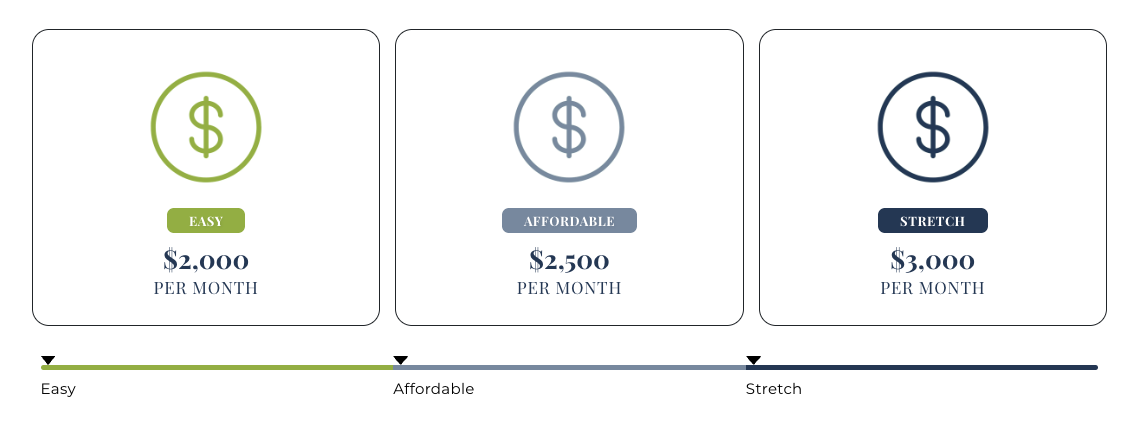
Step 1: Use our Buying Power Calculator
Our Buying Power Calculator makes it easy to find your ideal monthly payment. Just plug in a few details and we’ll immediately show you homes that match your price range. This is the step that turns “dreaming” into “doing.”
Step 2: Get prequalified with a lender (at no cost to you!)
Prequalification turns “dreaming” into “doing” because it gives you a clearer picture of what you can comfortably afford. A lender can help you understand:
- The price range you may qualify for
- Your estimated monthly payment (not just the home price)
- Down payment options and possible assistance programs (if available)
- How your credit and income impact your rate and loan options
Why this matters:
Shopping without numbers can lead to heartbreak—like falling in love with a home that’s outside your budget. When you know what you qualify for, you can focus on homes you can truly move into.
And if you’re not happy with the number? A good lender can help you create a plan—sometimes a few small changes make a big difference.
Q: What are some helpful questions to ask my lender?
A: Bring this list to your first call.
These questions help you avoid confusion and feel in control.
- What can I comfortably qualify for? A lender will help you understand not just the max approval amount, but rather what fits your lifestyle monthly.
- What are my down-payment options? Ask you lender about conventional, FHA, VA (if applicable), and any first-time buyer support options.
- What are my rate options?
Fixed vs adjustable, and how buying points works. - What do I need to prepare for in closing costs?
Get a rough estimate and what items are included. - What documents do I need?
Typical examples: pay stubs, W-2s, tax returns, bank statements, ID, etc. - What three things (if any) should I focus on to get closer to contracting on a home?
This is a great question for actionable next steps (credit, savings, debt ratio, paperwork).
Q: What costs should I plan for besides the down payment?
A: Budget for the “move-in ecosystem.”
Many first-time buyers plan for down payment—but forget the rest. Here are some more things to consider before buying your first home:
- Closing costs (lender can estimate)
- Earnest money (applied toward purchase—details vary)
- Homeowners insurance
- Prepaid items (taxes/insurance, depending on loan)
- Moving costs
- Utilities setup
- Basic essentials (blinds, fridge, washer/dryer—depending on what’s included)
Ready to take the next step?
If you want help turning your timeline + budget into real options, Baessler Homes can help you explore available homes and communities—and make the process feel a lot less intimidating.
- Fall Things to Do in Northern Colorado: Your 2026 Local Guide
- Becoming a Homeowner: The Kit to Get you Started
- New Townhomes Coming Soon to Timnath Ranch
- A New Affordable Homeownership Opportunity for Ault Renters
- CHFA Schools to Home for Public School Employees
- Conestoga Grand Reopening: New Townhomes in Ault, CO
- A Brief Guide to Outdoor Things to Do in Northern Colorado
- Townhomes: An Affordable Homeownership Opportunity for Greeley Renters
- Baessler Homes Returns to Conestoga in Ault, CO
- Embrace Attainability: Your Perfect New Home in West Evans, Colorado
The Latest News
Baessler Homes
33105 CR 33
Greeley, CO
3732 Lake Clark St., Evans, CO 80620
500 Gavin Ct, Hudson, CO 80642
621 85th Ave Ct, Greeley, CO 80634
823 Ayrshire Rd., Johnstown, CO 80534
604 Cheyenne Trail, unit A1, Ault, CO 80610
Call for hours - 970-573-7033
©2026 | Baessler Homes. All Rights Reserved
Site by Builder Designs







Call

